Saturday, August 31, 2024

World Press Photo 2024

The World Press Photo 2024

Montreal 17th Edition

August 28 - October 14, 2024

At Marché Bonsecours

Equivalent to the Oscar of the photography, World Press Photo is a recurring  annual  event extremely popular with professional photographers, the amateurs, and the general public.

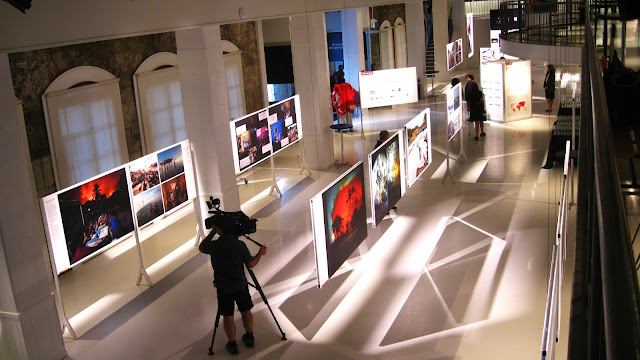
World Press Photo Montreal exhibition is one of the most popular in the world. In order to better meet the public demand (for the second year running) the event is taking place over six weeks instead of the traditional four.


This year, the winning photos were selected from over 61,000 entries submitted by 3,851 photographers from 130 countries, for a total of 24 winning projects and six honorable mentions, as well as two special mentions by an exceptional decision of the jury.

The images cover themes ranging from the war between Israel and Hamas to the climate crisis and the family. The works invite viewers to step outside the general news and take an in-depth look at exceptional but little-known stories from around the world.


A number of various independent and specialized international juries had chosen the regional World Press Photo winners for 2024 as per four individual categories: Single Images, Series, Long-Term Projects and Free Format. The global winners were announced on April 18, 2024, in Amsterdam.


Founded in 1955, the World Press Photo Foundation is an independent, non-profit organization with its headquarters in Amsterdam. The foundation is committed to supporting and advancing high standards of photojournalism and documentary storytelling worldwide. Each year, the exhibition travels to more than 100 cities in 45 countries and is seen by more than 4 million visitors. The World Press Photo receives support from the Dutch Postcode Lottery and PwC (Pricewaterhouse Coopers). The World Press Photo Montreal exhibition receives support from ICI RDI, La Presse, and the SDC Vieux-Montréal.


Click on Images to enlarge them

All photos @ Nadia Slejskova

Visit the World Press Photo Montreal 2024 website

For more information, follow the World Press Photo on Facebook and Twitter. 


Thursday, June 20, 2024

MNBAQ 2024: Helen McNicoll

HELEN McNICOLL: AN IMPRESSIONIST JOURNEY

A CELEBRATION OF LIGHT!

Musée national des beaux-arts du Québec

June 20, 2024 - January 5, 2025


Helen McNicoll (1879-1915) and her work is featured this summer in an exhibition at the Musée national des beaux-arts du Québec (MNBAQ). The MNBAQ is proud to present the first Québec retrospective in a century of the Canadian impressionist painter’s work. Visitors will discover an artist whose destiny was both quite incredible and fleeting. She is a little-known but a fascinating artist noteworthy for her outstanding mastery of light and atmospheric effects. The visitors will experience the irresistible charm of her work and her outstanding mastery of light and atmospheric effects. “Painter of the sun,” “A painter who spreads sunlight on her canvases,” and “A painter who addresses the senses” are some of the characteristics that qualify this artist.

The Helen McNicoll. An Impressionist Journey exhibition has been conceived through the prism of travel and the effervescence of a period and by examining the themes of independence, friendship, and women’s freedom. The retrospective exhibition assembles more than 65 paintings, of which 25 come from the remarkable collection of philanthropist and art lover Pierre Lassonde, and the remainder from 15 institutional and private collections and also includes sketches, a watercolour, and photographs presented in a refined setting. It invites visitors on a voyage and, above all, to experience an adventure bathed in vibrant, shimmering colours.

The exhibition also highlights the work of a free painter who pushed the boundaries as an independent professional woman at a time when women were often confined to the domestic sphere, thereby contributing to the recognition on the world stage of Québec and Canadian art. The splendidly luminous exhibition reveals a major timeless, indeed essential, body of work

A remarkable destiny

Born in Toronto in the late 19th century, Helen McNicoll grew up in Montréal in a well-to-do environment. Her parents were recent British immigrants to Canada who encouraged artistic practice. Scarlet fever rendered her deaf at the age of 2 and her parents encouraged her from childhood to develop her artistic and musical creativity despite her handicap.

The McNicoll family’s wealth meant that she could paint freely without having to worry about selling her works or teaching to support herself. Moreover, family relationships afforded her contact with Montréal’s leading art collectors at the time.

At the Art Association of Montréal McNicoll studied with William Brymner (1855-1925), who encouraged his students to travel in Europe to further their training. She made London, then a prosperous art centre, her base, where she undoubtedly discovered more progressive work than what was being done in Canada.

Helen McNicoll, who was noteworthy for her love of travel and the discovery of new spaces, undoubtedly perceived her relationship to the world and her artistic output linked to fledgling tourism at the turn of the 20th century.

Her European travels put McNicoll in direct contact with the innovative styles teeming in these artistic communities and gave her a special understanding of the development of impressionism and post-impressionism. Stimulated by all these influences, McNicoll painted landscapes focusing on rural life and genre scenes. She developed a fresh, brilliant style that became her own distinct language.

The artist also played a significant role in bridging North American and European art. She was celebrated in her lifetime for the high quality of her light-bathed rural or seaside landscapes and intimate scenes in which feminine subjects predominate.

Helen McNicoll’s brief but prolific career was shaped by the presentation of scores of works at exhibitions in Canada and England for which she received awards for her mastery of light and her unique pictorial representation. In addition to the other awards, she was elected in 1913 to the Royal Society of British Artists and, in 1914, was one of the rare women elected as associate members of the Royal Canadian Academy of Arts.

Travel as a way of life

Helen McNicoll settled in London. She travelled in England and Europe and frequently to Canada. She led a cosmopolitan life but at that time many artists withdrew from urban centres, especially during the summer, to paint outdoors in the countryside or in villages in order to explore landscapes.

McNicoll’s research focused on the effects of light and atmosphere, sustained by her numerous trips south of Paris, to Normandy and Brittany, Belgium, the Mediterranean, and Italy, including Venice, and to artists’ colonies, where she spontaneously refined her palette.

Praise for light and women’s work

The artist was often on the move and captured her ever-changing environment remarkably. In Brittany, she painted village market scenes in honey tones. In Venice, her attention focused on the scintillating water of the canals. The hot sand and blue sky of European beaches afforded a backdrop suited to women and girls wearing dazzling white dresses.

This ode to travel and the mastery of light also enabled her to examine the themes of female independence, risk-taking, sisterhood, and freedom for women in the stimulating context of the English suffragettes’ fight for the right to vote.

Her favourite subjects were scenes of everyday life, although her interpretation differed from that of the impressionists by focusing more closely on women’s labour and the intimate lives of women at the turn of the 20th century.

Exhibition highlights

The exhibition comprises six separate areas embellished, in the middle, with central structures, one of which recalls the shape of a compass and its cardinal points to evoke travel. It presents all the key elements of McNicoll’s artistic career: Light and Shadow, The Children’s Playground, Sketchbook, Women at Work, The Water’s Edge, Life en plein air, Lighting the Studio, and On the Boulevard.

The retrospective assembles the artist’s finest paintings, including such major works as Sunny September (1913), In the Shade of a Tree (1915), Picking Berries (1913), Stubble Fields (circa 1912), The Chintz Sofa (1913), Evening Street Scene (circa 1910) and Montreal in Winter (1911).

Sunny September (1913) is a magnificent fall scene that quickly established McNicoll’s renown with art critics and key art market stakeholders. This luminous fall day envelopes the viewer.

In the Shade of a Tree (1915), from the MNBAQ’s collection, reveals scenes of women and children that McNicoll cherished and forges links with the outstanding work of impressionist artists Mary Cassatt and Berthe Morisot.

Picking Berries (1913) examines the importance that McNicoll attached to outdoor painting and composition but also the context of feminine collaboration essential to the development of her career since this work is reflected in a painting by Dorothea Sharp with whom her friendly and professional relationship was fundamental.

McNicoll produced several works devoted to fields or haystacks following the example of works by Claude Monet. Stubble Fields (circa 1912) is an eloquent example. The artist put into practice in this painting several new theories of colour circulating in impressionist and post-impressionist circles since the late 19th century.

With The Chintz Sofa (1913), McNicoll briefly abandoned her sunny landscapes for interior scenes. In the painting, it is possibly Dorothea Sharp sitting on the elegant chintz sofa in the living room of the workshop that she shared with McNicoll in London. In light of the suffragettes’ struggles in the early 20th century, art historians have proposed a feminist interpretation of this scene that supports Sharp’s involvement in the Society of Women Artists.

Evening Street Scene (circa 1910) proposes an evening scene that is unique in McNicoll’s output. The electric light replaces the sun, thereby conferring on the painting a very modern note that emphasizes the artist’s interest in scenes of everyday life, as do her numerous market scenes, and for all manner of effects of light and atmosphere.

Montreal in Winter (1911) also reveals the importance of McNicoll’s travels between Canada and Europe and her interest in the snowy landscapes of her homeland. The painting reflects works by Canadian impressionists Maurice Cullen, James Wilson Morrice, Clarence Gagnon, and Marc- Aurèle de Foy Suzor-Coté, among others.

The catalogue is the perfect complement to the exhibition

To celebrate the luminous work of Helen McNicoll, her remarkable destiny, and her contribution to the history of Québec, Canadian, and international art, a catalogue has been published to accompany the retrospective organized by the MNBAQ.

The work, which hinges principally on the notion of travel, focuses on most of McNicoll’s works exhibited, including those from Pierre Lassonde’s impressive collection. Edited by the MNBAQ and 5 Continents Editions, the 160-page bilingual (English and French) catalogue is accompanied by four essays, each of which sheds light on a facet of the artist’s work.

The introductory text by Anne-Marie Bouchard examines McNicoll’s work in the context of the mobility of women artists in the early 20th century. It broaches transatlantic travel, American and European destinations, artistic networks, and the social implications of travel. Samantha Burton provides a biographical overview of the artist that retraces the development of the artist’s career with particular emphasis on the importance of her transnational travel. Julie Nash also focuses on the notion of mobility by closely examining McNicoll’s outdoor paintings undertaken throughout her travels, including the practice centred on painting small plein-air oil sketches. Lastly, Caroline Shields and Valerie Moscato also examine the artist’s work methods through a thorough examination of her pictorial technique to attempt to grasp how she began and completed her large canvases, a still unknown aspect of her art.


Wednesday, June 05, 2024

MMFA 2024: 300 Hundred Years of Flemish Art

SAINTS, SINNERS, LOVERS AND FOOLS

THREE HUNDRED YEARS OF FLEMISH MASTERWORKS

June 8 – October 20, 2024

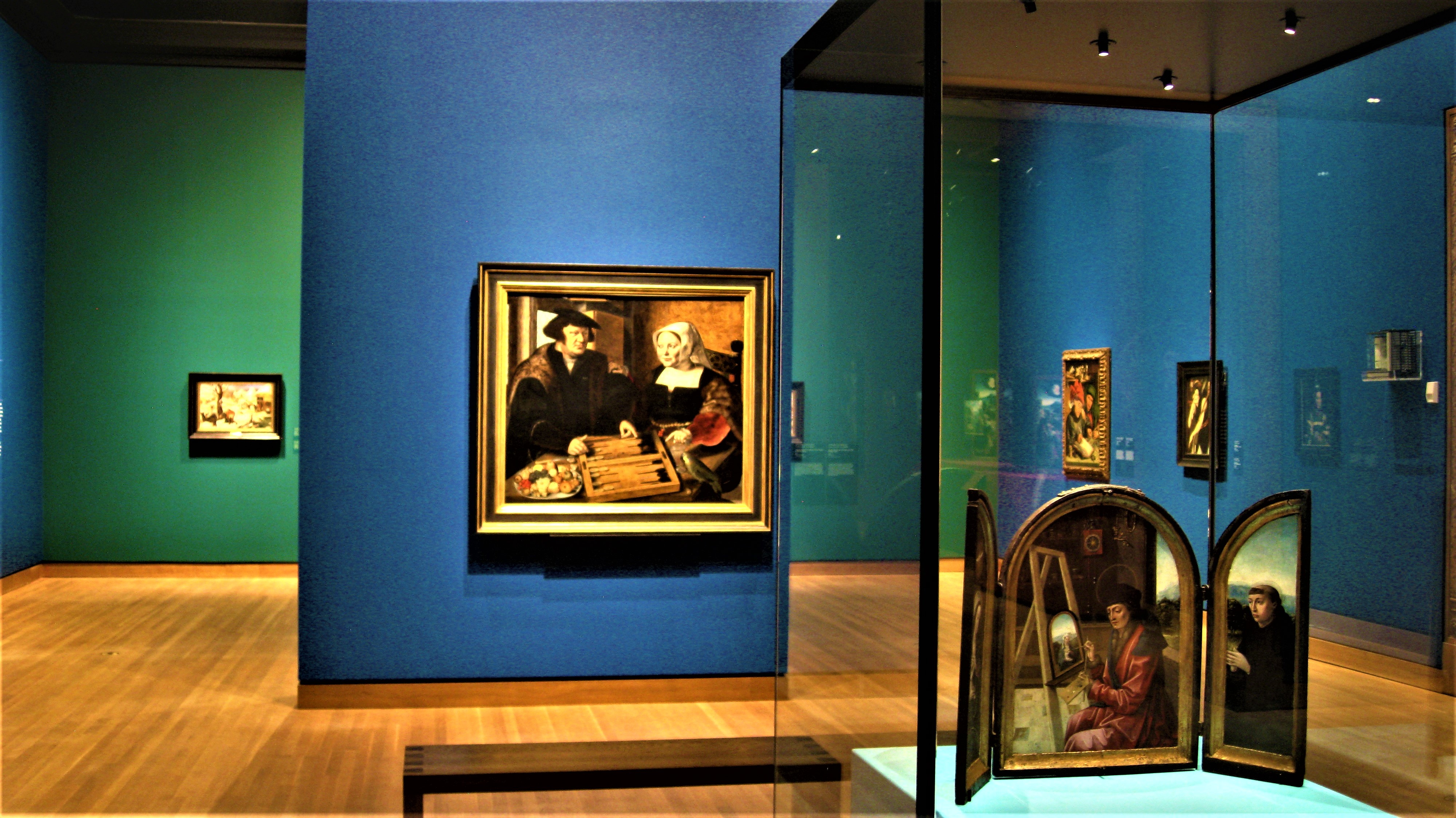
The Montreal Museum of Fine Arts (MMFA) is presenting a major exhibition that showcases The Phoebus Foundation’s world-class collection of Flemish art. Couched in timeless themes, the show transports audiences to the Southern Netherlands during a dynamic period of social, scientific, economic and artistic development (1400-1700). Saints, Sinners, Lovers and Fools is organized by the Denver Art Museum and The Phoebus Foundation of Antwerp, Belgium. It presents masterworks by celebrated artists of the day whose works were created during that 300 years long period, including Hans Memling, Peter Paul Rubens, Anthony van Dyck, Jacob Jordaens and Michaelina Wautier, among many others. The Montreal presentation is also complemented by selections from the MMFA’s renowned collection of Flemish art.

The exhibition is laid out in six sections and features some 150 works, including monumental paintings, sculptures, books, silverwork and maps.


GOD IS IN THE DETAILS

This section presents religious art of the 15th and early 16th century. In looking closely at these works packed with symbolism and delightful details, such as Hans Memling’s The Nativity, or Triptych with the Adoration of the Magi by Pieter Coecke van Aelst the Elder, the public will appreciate how Flemish citizens used images to interact with higher powers, build community and secure their legacyAfter the Black Death (1347–1351) and the Hundred Years’ War (1337–1453), life in Europe seemed fleeting and uncertain. Many people found solace in the Catholic Church, with its promise of eternal salvation.. 


PORTRAIT MODE

The next section is dedicated to portraits that celebrate the wealth and status of individuals and, by the same token, mark the dawn of the art patron. Among the works displayed are notably Portrait of Archduke Albert of Austria by Peter Paul Rubens, the Double Portrait of Husband and Wife Playing Tables by Jan Sanders van Hemessen, and a work by his daughter, Catharina van Hemessen, titled Portrait of a Lady. Following this section is a group of paintings depicting fools and foolish behaviour that showcases how artists used humour to both moralize and entertain.


FAITH AND FOLLY

Unlike portraits of the wealthy, which exude confidence, pride and self-satisfaction, the paintings in this section critique human flaws and weaknesses, often at the expense of others. In Flanders during the 1500s, people may have seemed to be having a bit too much fun: indulging in food and drink, dancing and generally living in excess. Such behaviours could lead to greed, lust and other follies. In the face of their sins, all humans could do was admit their shortcomings and laugh at themselves... or at the ones portrayed. The scenes in these paintings are meant to hold up a mirror. They are often full of jokes, pranks and witty double meanings, but the punchline is always deadly serious: Do not be like the fools and sinners in these artworks, otherwise you will never get to heaven.


MYTHOLOGY AND NATURE

In the wake of the Italian Renaissance, stories from Greek mythology joined the ranks of fashionable subjects in art. Its epic tales of

love, tragedy and deceit provided artists with endless source material, some of it quite fleshy and provocative. In addition, the study of ancient Greco-Roman art and culture brought new ways of investigating the natural world and humankind’s place within it. This period saw significant advancements in medicine, botany and geography, which in turn shaped the way artists represented nature and the body. Europeans also looked to their ancient past to make sense of the remote, non-Christian civilizations they were encountering through global trade and colonial exploits. Then as now, art, science, technology and politics were closely intertwined.

A WORLD IN TURMOIL

War ravaged Europe in the late 1500s. The conflict between the Netherlands and Spain began in 1568, and went on for eighty years of bloodshed, looting and destruction. Determined to keep the wealthy northern territories under his authority, King Philip II of Spain sent his favourite daughter, the Infanta Isabella, and her husband, Archduke Albert, to govern the rebellious region. The two used Catholicism in an attempt to glue their fragmented provinces back together, and art played a key role in this agenda. International celebrity painters, such as Peter Paul Rubens and Anthony van Dyck, created dramatic paintings that drew upon the strong Catholic imagery of Italian art. Their styles, which emanated across genres, appealed to the heightened sensibilities of a society plagued by war and political instability. Ultimately, the Spanish failed to unite the Netherlands under Catholicism, and in 1648 it formally split in two. The northern region was recognized as an independent Protestantdominated republic, and the southern part remained under Spanish Catholic rule.


VANITAS

By the seventeenth century, the art market was booming in the Southern Netherlands. Middle- and upper-class townspeople began collecting across genres and creating lavish picture galleries in their homes. This gallery of the exhibition is inspired by such spaces, which are documented in paintings of the time. Because amassing worldly goods could be seen as an act of vanity that privileges man over God, many of the works in these collections include reminders of mortality, including skulls and skeletons. Even portraits and still lifes were meant to provoke reflection on the fleetingness of life on earth. After all, it is only in the world of a painting that the young stay young, food does not rot and flowers never die. As you conclude your visit, we invite you to contemplate the range of desires—to connect, to possess, to marvel, to learn—that underlie the collection and display of art both then and now.


Katharina Van Cauteren, Chief of Staff of The Phoebus Foundation Chancellery stated:

“We are excited for the next chapter of our Flemish masterpieces at the MMFA. This captivating exhibition is a rollercoaster ride through a rebellious 300 years of Flemish history, guaranteed to captivate a new wave of art enthusiasts!”

Chloé M. Pelletier, Curator of European Art (before 1800) at the MMFA elaborated:

“Presented first in Denver and then in Dallas, this show offers deeper insight into the different areas of Flemish art and deals with universal timeless themes. Flanders, this small but mighty society, was seeking to establish itself in a fast-changing, increasingly globalized world. Art played a crucial role in this, and it’s fascinating to see that the legacy of this period persists today,”

Publication

The exhibition is accompanied by a richly illustrated art book of over 400 pages, edited by Katharina Van Cauteren, Chief of Staff of The Phoebus Foundation Chancellery. Titled From Memling to Rubens: The Golden Age of Flanders, it has been adapted in French by the international publisher Hannibal Books. 

The MMFA’s collection of Flemish art

The Museum boasts one of the largest collections of Flemish art in North America, with over 200 works. The Montreal presentation of the exhibition will include paintings by Adriaen Isenbrandt, Jan Fyt and Jan Bruegel the Elder, among other works from its collection.


Click on images to enlarge them.

All photos @Nadia Slejskova

This article's dedicated internet address or also click on the title above the very first photo in this article.

Visit the Montreal Museum of Fine Arts website to check on the opening hours and to purchase your tickets online.


Wednesday, May 29, 2024

McCord 2024: Portraits and Fashion


Portraits and Fashion: Quebec Photographers Beyond Borders

Turning the lens on Quebec talent

May 31 - September 29, 2024

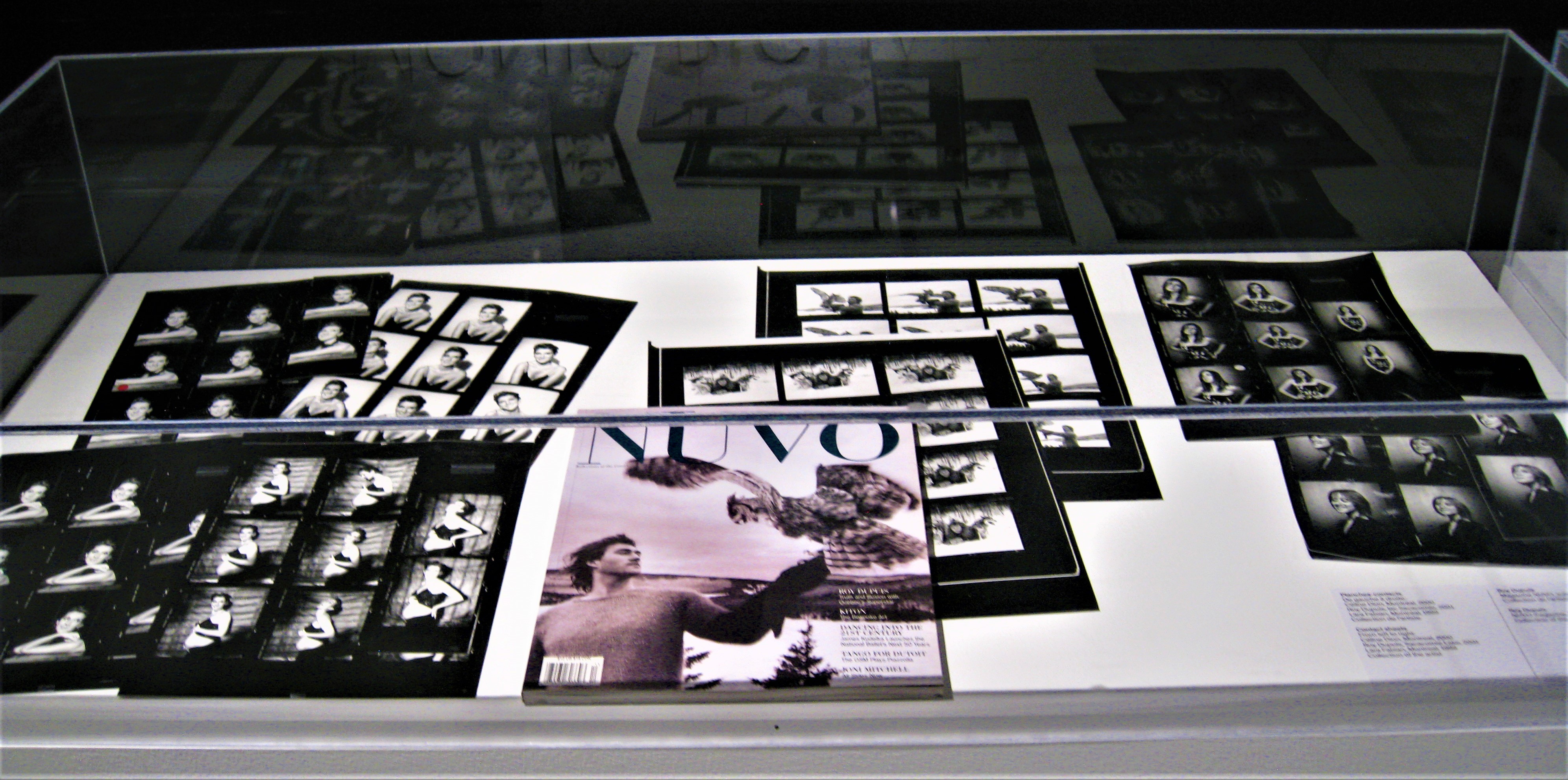
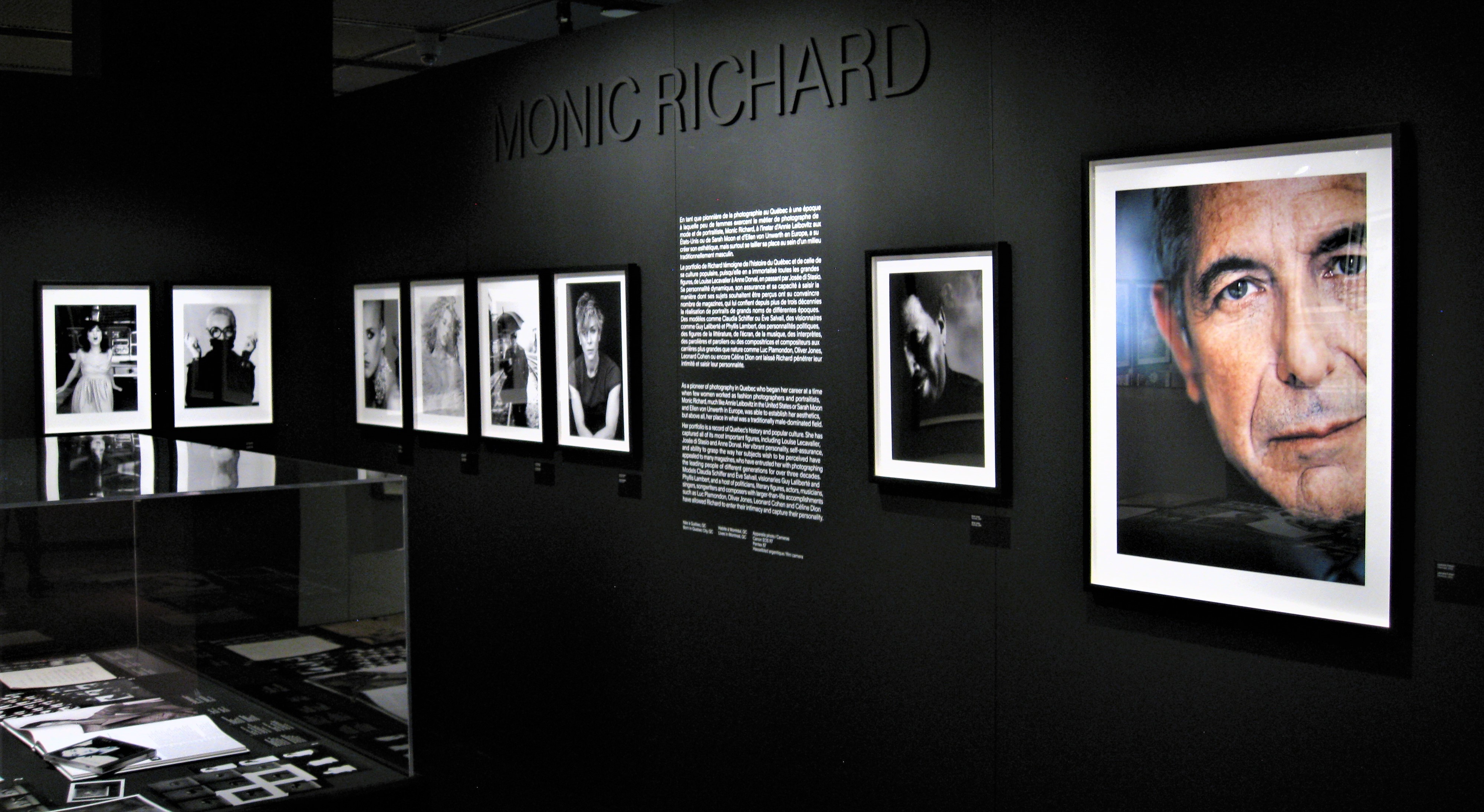
This McCord Stewart Museum’s exhibition is foremost a celebration of the talent of Quebec photographers, whose creative works appeared in the world’s leading fashion magazines, advertising agencies, and in music scenes. The prints of 17 established and emerging photographers who were either born in Quebec or immigrated here, but who all have international reach, are brought together in a well-designed exhibition. They are: Max Abadian, William Arcand, Richard Bernardin, Alex Black, Sacha Cohen, Cristina Gareau, Andréanne Gauthier, Royal Gilbert, Shayne Laverdière, Carl Lessard, Monic Richard, Norman Jean Roy, Étienne Saint-Denis, Nelson Simoneau, Oumayma Ben Tanfous, Xavier Tera and villedepluie.

In addition to fashion photos taken for the press, an impressive series of iconic portraits are presented to the public, from Céline Dion, U2 and Charlotte Cardin to Nelson Mandela, Zidane, Elisapie, Adele, Barbie Ferreira, Mika and Les Louanges.


This exhibition, presented by Holt Renfrew Ogilvy, is aimed at a wide audience with a passion for photography, fashion and the world of Quebec, Canadian and international celebrities. It is accompanied by a catalogue featuring 268 photographs by the 17 photographers.

Some twenty audiovisual pieces were produced for the occasion, including a multi-surface projection by the creative agency Rodeo FX. They offer a peek inside the photographers’ artistic approach and feature anecdotes from artists who were photographed by the exhibition photographers.


Anne Eschapasse, President and CEO of the McCord Stewart Museum’s stated:

“This exhibition is the second instalment of our summer programming devoted to fashion photography and celebrity portraits, alongside Norman Parkinson: Always in Style. It’s an unprecedented opportunity to meet 17 local photographers, who are true ambassadors of Quebec’s creative vitality, reaching out to the four corners of the globe. It also reflects the growing concern for greater diversity in the fashion industry and society in general. Perhaps it will inspire the next generation of photographers to dare to dream beyond borders.” 

The exhibition was curated by Thierry-Maxime Loriot, the man behind several memorable exhibitions, including Thierry Mugler: Couturissime, The Fashion World of Jean Paul Gaultier: From the Sidewalk to the Catwalk, and most recently, the retrospective devoted to the creative duo Victor & Rolf, Portraits and Fashion: Quebec Photographers Beyond Borders is his first exhibition to focus on contemporary editorial, commercial and commission photography.

 Thierry-Maxime Loriot stated:

“There are so many ways you could define the work of these 17 artists, who brilliantly blend the different genres of photography. They are sometimes referred to as portraitists, documentarians, image artists or fashion photographers. But they all have one thing in common: Quebec. Whether from Tunisia or Iran, the Laurentians or Montérégie, well-established or yet-to-be-discovered, these artists have all developed their unique creativity and aesthetic vision in Quebec, before exporting and establishing themselves as key players on today’s international scene. For some, Quebec’s fashion and publishing microcosm and its photography schools have been a springboard that has propelled them towards the great capitals – such as New York, London, Paris, Los Angeles and Tokyo – and the pages of the biggest magazines.” 


A summer of fashion at the Museum

The exhibition completes the diptych of exhibitions devoted to fashion photography presented this summer at the McCord Stewart Museum. Portraits and Fashion: Quebec Photographers Beyond Borders picks up where Norman Parkinson: Always in Style leaves off in 1990, presenting the evolution of recent fashion photography. Visitors to the Museum will be able to explore a century in the evolution of fashion and the particular photographic art associated with it. The two exhibitions will also reveal just how far we’ve come since Norman Parkinson’s time.

Click on images to enlarge them.

All photos @ Nadia Slejskova

For more information about current exhibitions and special evens associated with this exhibition, visit the McCord Stewart Museum website.


Friday, May 24, 2024

Centaur Theatre 56th Season

Centaur Theatre 56th Season

CENTAUR THEATRE ANNOUNCES ITS 2024/25 SEASON:

Where Great Stories Bring Us Together

May 23, 2024

PRESENTING:


Sakura

September 17, 2024 — October 6, 2024

A nostalgia-filled comedy that reimagines Chekhov for the 21st century, following a down-and-out family as they face the impending sale of their beloved orchard. based on Anton Chekhov’s masterpiece The Cherry Orchard, written by Montreal playwright and actor Harry Standjofski, and directed by Centaur Artistic Director Eda Holmes. This world premiere adaptation brings the play home from 19th century Russia to 21st century Quebec where one over-privileged family faces an uncertain future with nostalgia, anxiety, and a healthy dose of Chekhovian wit.

Three Women of Swatow

November 5, 2024 — May 24, 2024 

By Toronto-based Chloé Hung, this play paints the portrait of three generations of women through the lens of the Chinese-Canadian diaspora. This darkly comedic play looks at the legacy of abuse, the power of family, and how to prevent the resurrection of a headless chicken. Originally presented at the Tarragon Theatre, this award-winning and critically acclaimed work will feature a cast and creative team drawn almost exclusively from the Asian-Canadian community. A French translation of the play has been commissioned to offer performances with French surtitles.

Strawberries in January - A Musical Fantasy

January 21, 2025 — February 9, 2025

Written by Évelyne de la Chenelière and translated by Morwyn Brebner. An aspirational dreamscape following four lonely hearts as they search for the kind of connection with someone else that makes you want to sing. This musical adaptation of the original play is led by the renowned Québec director Frédéric Bélanger. It is a beautiful mix of the Anglophone and Francophone theatre communities.

For the Pleasure of Seeing Her Again

May 13, 2025 — June 1, 2025

Michel Tremblay's classic an homage to Tremblay's mother, returns to the Centaur stage for the first time since it premiered in English in 2002. The production will feature Ellen David and Emmanuel Schwartz, bringing these two leading actors—one from the English community and one from the French community—under the direction of Tremblay’s close collaborator Alice Ronfard. It promises to reveal this Quebec classic in a whole new light. 

-----------------------------------
For more information on the present and future programs and activities, visit the Centaur Theatre website.