Showing posts with label Ceramics. Show all posts

Thursday, February 29, 2024

McCord Stewart 2024: MC Snow


Presence of the Past by MC Snow

Visual poetry rooted in tradition and the transmission of knowledge

March 1 - August 18, 2024

McCord Stewart Museum new exhibition Presence of the Past by MC Snow is a part of the Contemporary Native Art Biennial (BACA). MCShows' Kanien’kehá:ka installation immerses the viewer in a space filled with the objects from the Museum’s Indigenous Cultures collection including some contemporary works.

MC Snow explored the Museum’s reserves and selected forty objects from which he drew inspiration to create two original sculptures at the center of the exhibition.


Through the emotions and messages conveyed by the Kanien’kehá:ka cultural objects conserved by the Museum, the artist puts forward a contemporary interpretation of the teachings, traditions and know-how transmitted by the objects in the collection. With Presence of the Past, MC Snow wishes to emphasize the importance of researching and preserving Indigenous cultural property, essential to transmitting the knowledge and safeguarding the cultural traditions of Indigenous peoples.


Some of the cultural objects that are presented at the exhibition date back to the 14th century. By juxtaposing those objects – mostly of Kanien’kehá:ka origin – with the contemporary representations of his reflections on the past, MC Snow explores his personal visceral emotions towards them and focuses attention to the ways in which they convey meaning.

Presence of the Past focuses on poetic metaphors relating to truth, care, protection, transmission and memory. Those metaphors express the teachings that emanate from the creation story, forming a visual poetry rooted in oral tradition.

 MC Snow explained:

  “For me, pots have always been objects that carry something. We place things in pots to contain and protect them. The same applies to baby carriers. Just as we carry ideas, we carry our children. These are objects and knowledge that we preserve for the future, and therefore for generations to come. The Girl with the Basket (one of two works by MC Snow in the exhibition) is also a character who communicates ideas through her basket. She communicates them to the children she carries in her baby carrier.” 

 Research and knowledge preservation

The artist’s concern with emphasizing the importance of researching and preserving Indigenous cultural property is reflected in the objects selected by MC Snow and Jonathan Lainey, Curator, Indigenous Cultures at the McCord Stewart Museum. The public will be able to view some forty rarely exhibited cultural items from the Indigenous Cultures collection: pottery, baby carriers, dolls and arrows. For MC Snow, the arrows represent self-preservation and the protection of Indigenous languages and cultures. The dolls embody the stories that Kanien’kehá:ka elders tell their children to explain the world around them. Baby carriers and decorated pots are used to pass on these values and teachings to future generations. The pot fragments are preserved so that their past remains accessible. The artist insists on the importance of treating objects with dignity, because for Indigenous nations, cultural property is more than just an object; it holds the spirits of their ancestors.


MC Snow stated:

 “Seven years ago, I embarked on an ambitious project that teamed up the City of Montreal and the Kanien’kehá:ka territory of Kahnawake to address and valorize the theme of truth and reconciliation. I believe that every time we, as a First Nation community, engage in any kind of meaningful way with Tiohtià:ke, it furthers our way on this path of reconciliation and respect. We are, after all, very close neighbors. Through the Peel Street Project, the BACA, and now the McCord Stewart Museum, I take responsibility to accept and uphold my end of the bargain: to engage in a truthful and meaningful dialogue to promote this idea of peace and mutual respect.

If one memory or emotion is taken away from this Presence of the Past, let it be that the spirit it was done in was one of good-minded collaboration, much conversation and opinion sharing, and enthusiastic effort from both sides. This was my desire in this work, to take part in building a new vessel that could carry our hopes and stories into the future. My time with the McCord Stewart Museum has been a turning point in my own personal journey of truth and reconciliation. I hope to pass on and send people home with something good to share.”

MC Show presenting his exhibition

 MC Snow

MC Snow is a multidisciplinary Kanien’kehà:ka artist living in Kahnawá:ke. MC is a graduate of the University of Ottawa fine arts department (BFA). He has been working and exhibiting in Canada and the United States since the 1990s. His mostly sculptural work combines traditional materials and techniques. While reflecting contemporary concerns, his work contributes to preserving traditional artistic value and defending Kanien’kehà:ka cultural identity. 

Two photos below capture MC Show working on one of his sculptures at the exhibition at his studio.


Click on Images to enlarge them

All photos @ Nadia Slejskova

For more information about current exhibitions and special evens associated with this exhibition, visit the McCord Stewart Museum website.

For this article's dedicated internet address, click on the title above the very first photo.


Friday, June 02, 2023

MMFA 2023: Indigenous Colombia

Portable Universe

THOUGHT AND SPLENDOUR OF INDIGENOUS COLOMBIA

June 3 – October 1, 2023

Jean-Noël Desmarais Pavilion – Level 3

This new exhibition at the Montreal Museum of Fine Arts (MMFA) is the result of the collaborative efforts of the following cultural institutions: the Montreal Museum of Fine Arts, the Los Angeles County Museum of Art, the Houston's Museum of Fine Arts, the Colombia's Museo del Oro and the Unidad de Artes y Otras Colecciones of the Banco de la República, Colombia. 

The exhibition is the culmination of several years of close collaboration between the curatorial team and the Arhuaco community of the Sierra Nevada de Santa Marta region in northern Colombia. The largest exhibition of art from Colombia ever to be presented outside of that country, it proposes alternative ways of approaching the world around us and presents a completely new perspective on Indigenous art from this region.


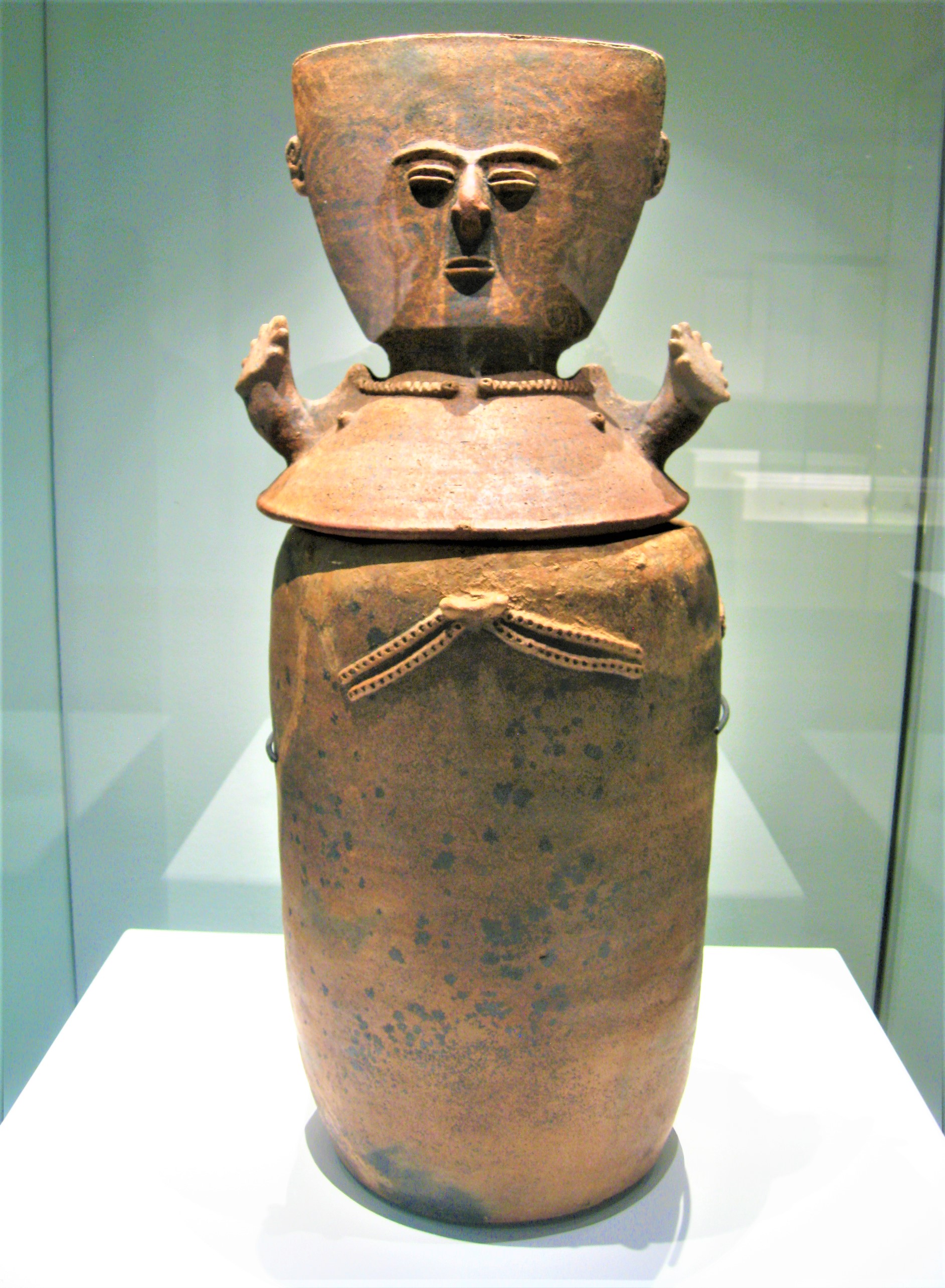
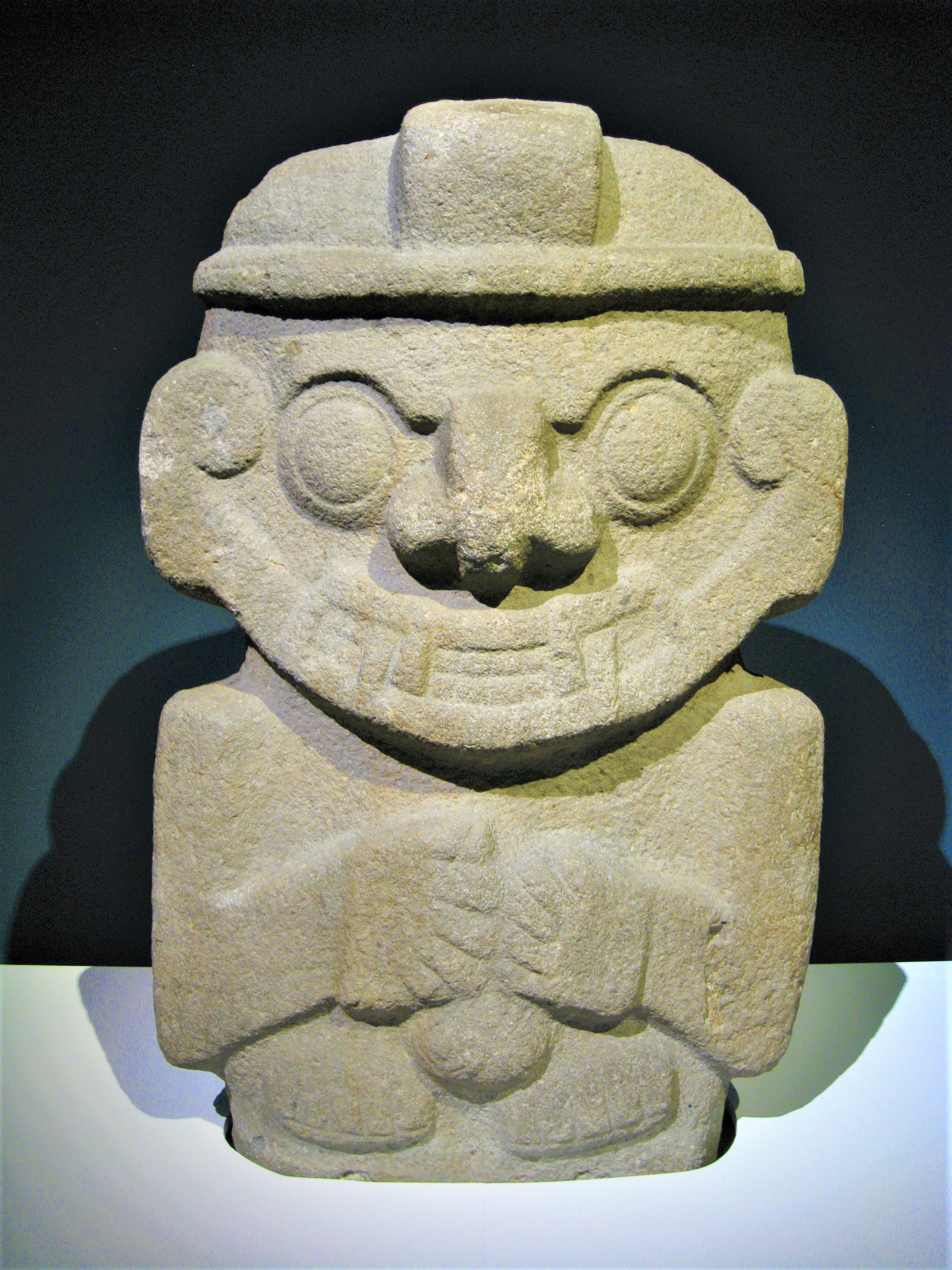
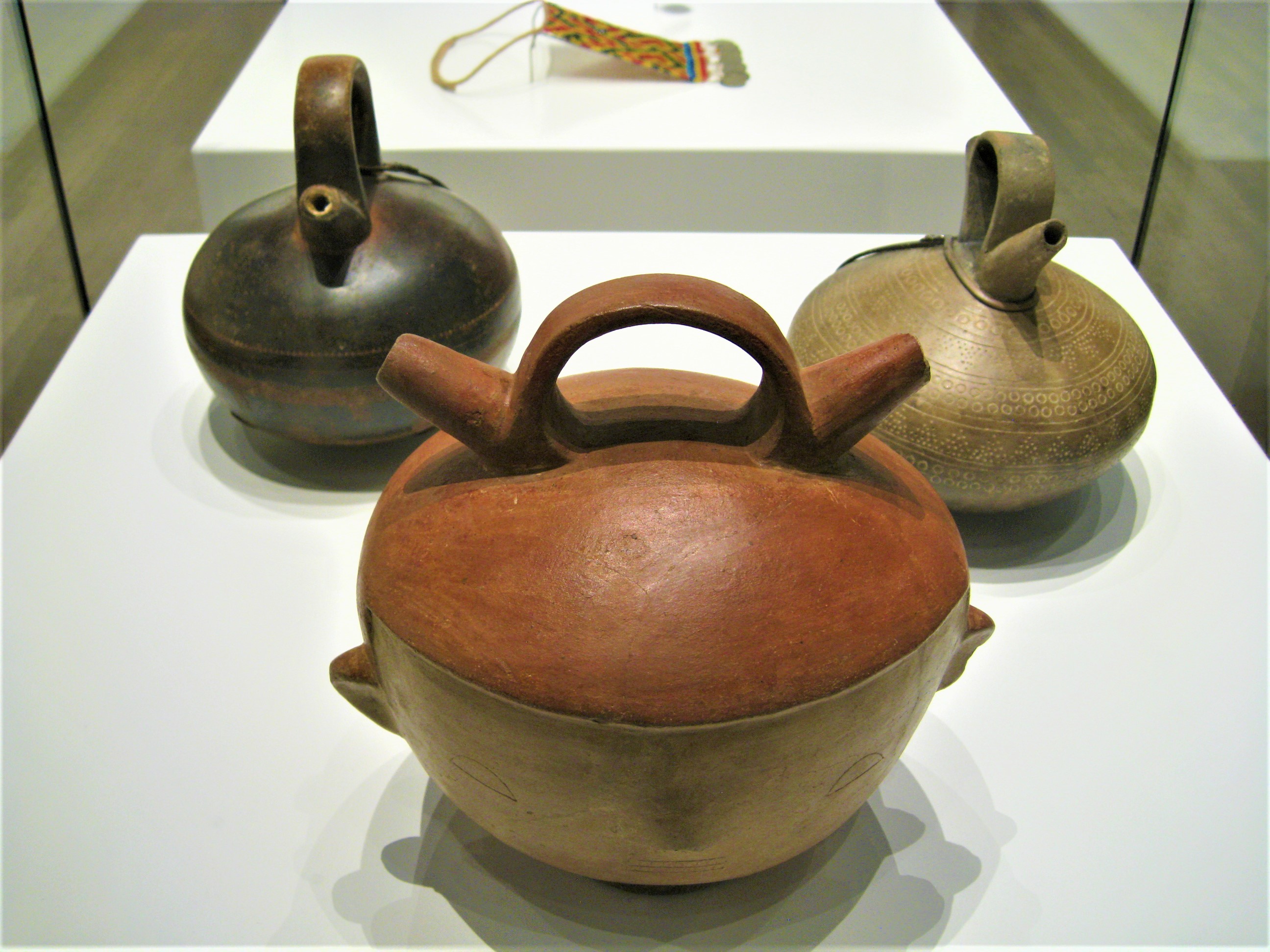
The exhibition brings together some 400 works of art from Colombia dating from about 1500 BCE to the present day, most of which have never been exhibited in Canada. This major show gives centre stage to Indigenous perspectives in what is a departure from the more traditional museum discourse about the arts. It invites visitors to engage in a cultural dialogue across space and time and to reflect on a different way of understanding the world and our place in it.


The objects on display, as stated by Erell Hubert, the Curator of Pre-Columbian Art at the MMFA and also the Curator of the Montreal exhibition, have a deeper meaning:

“The works that make up the exhibition are not simply material objects but vectors of ancestral memory and knowledge. Their messages continue to hold great relevance for our world today and lead us to think, among other things, about the interdependence between our planet and all the beings that inhabit it. Portable Universe offers an opportunity to reflect on our individual and collective roles in maintaining a balance in nature. The Arhuaco community invites visitors to connect with the works, hear their messages, and become active participants in preserving this balance.”
 

With the European conquest, Indigenous cultures of the Americas were discredited, and the well-established system to which millions of people turned to understand the meaning of life and existence was reduced to crude superstition. This exhibition attempts to restore a number of these millennia-old teachings by revealing the works’ intrinsic meaning and the life they contain. It draws from contemporary Indigenous concepts to paint a vision of the world in which ancient works of art have relevance for today and tomorrow.


Arhuaco wisdom also teaches that the works in this exhibition were made in conjunction with the principles of creation, and therefore have no beginning or end, which is why the decision was made to not include dates on the individual labels for these items. Instead, the focus is put on their role as participants in the networks of life.


Coming in large part from the Museo del Oro in Bogotá, the creations attest to the diversity and richness of Colombia’s Indigenous cultures. The exhibition features some of the most remarkable artworks ever made in this region, including intricately cast gold pendants, hammered gold masks, ceramic effigies of mystical creatures, rare ancient textiles and a series of contemporary watercolours. These works are displayed against a backdrop of image projections and a soundscape composed by Luis Fernando Franco, featuring ancient ocarinas.

 A PARTICIPATIVE REFLECTION AREA

The exhibition ends with a participative reflection area that is unique to the Montreal presentation. It aimed at inspiring visitors to reflect on their place and role in the universe.


DOCUMENTARY SERIES UNPACKING THE UNIVERSE: THE MAKING OF AN EXHIBITION

This nine-episode documentary produced by the Los Angeles County Museum of Art takes the public behind the scenes of this major exhibition. The series retraces the six years of research and design that went into this collaborative project with the Arhuaco community. In addition to showing the making of the exhibition, Unpacking the Universe allows the public to see archaeological sites and breathtaking scenery, as well as witness enriching conversations with Arhuaco elders on their view of the world and present-day issues.


Visit the the Montreal Museum of Fine Arts website to check on the opening hours and to purchase your ticket online.

Click on images to enlarge them.

All photos @ Nadia Slejskova

For this article's dedicated internet address, click on the title above the very first photo.


Sunday, November 24, 2019

MMFA 2019: Van Horn's Japanese Ceramics


OBSESSION:
SIR WILLIAM VAN HORNE’S JAPANESE CERAMICS

November 20, 2019 – March 1, 2020 

Sir William Van Horne was a man of many achievements. As the president of the Canadian Pacific, he build Canada’s transcontinental railway. As a private man, he was an avid collector of Japanese ceramics which was made for the Japanese domestic market. Though he never visited Japan during his lifetime, the crates with the ceramics he purchased while in Canada were shiped to him by boats over the Pacific ocean.

He lived at 1139 Sherbrooke Street West in Montreal, just steps from the Museum. Between 1883 and 1893, he acquired close to 1,200 examples of Japanese ceramics. His collection was world renowned during his lifetime. It is exceptional not only for the number of objects it consists of, but most remarquably for the compulsive diligence with which he documented it. He knew every item in his collection by heart, and had an individual relationship with each item. Absolutely every item was catalogued in a series of notebooks, some on of them on view at the exhibition. In addition, Van Horn carefully illustrated his ceramic pieces, in some cases rendered them in large watercolour paintings. The MMFA exhibition includes several of these “case studies,” where an object, its description, sketch and watercolour are displayed side by side.

Van Horn lived at an era of private collectors, who knew each other, belonged to the same social circles, visited each other's collections, and staged private exhibitions at their homes. The collection of artistic objects activity was highly regarded and praised by Van Horn's peers.


Sir William Van Horne

William Cornelius Van Horne was born in 1843 in Illinois. At a very young age, he developed an interest in paleontology and fossil classification. Leaving school at age 13, he found a job with the Illinois Central Railway and then with the Chicago & Alton Railway, where he became superintendent general at the age of 29. He subsequently became president of the Southern Minnesota Railroad, where in his first year he successfully turned around the financially troubled company with his innovations.

In 1881, the Canadian Pacific Railway faced a daunting challenge: a dream of connecting the West Coast of the country with the East Coast by building a railroad within 10 years. To do so, the company called upon Van Horne’s talents. His assignment was to lay 4,665 kilometres of rail across a continent that had scarcely even been surveyed. He rose to the challenge in 1885, despite a host of obstacles, and spent 11 years as president of Canadian Pacific. Under his auspices, the company was restored to financial health and would become the world’s largest transportation system. He left this position to launch a railway in Cuba. His success and his involvement with the boards of directors of some 40 Canadian companies and organizations – including the Art Association of Montreal, the forerunner to the MMFA – made him one of the country’s most influential businessmen. When he died in 1915, he was a Canadian citizen, British knight, and a multimillionaire.

In 1944, Van Horne’s daughter donated a group of 595 works to the Art Association of Montreal, including paintings by Canaletto, Cézanne, Daumier, Greco, Guardi, Monet and Tiepolo, along with 217 Japanese ceramics. This was the beginning of the MMFA’S collection of Asian art. During his lifetime, Van Horne also gave 150 other ceramic objects from his collection to the ROM. 


Exibition Location

Montreal Museum of Fine Arts
Liliane and David M. Stewart Pavilion – Level 2


Click on images to enlarge them.
Hover over images for description and credits.


For more information about the Montreal Museum of Fine Arts exhibitions and activities, visit the museum's website.