Wednesday, May 29, 2024

McCord 2024: Portraits and Fashion


Portraits and Fashion: Quebec Photographers Beyond Borders

Turning the lens on Quebec talent

May 31 - September 29, 2024

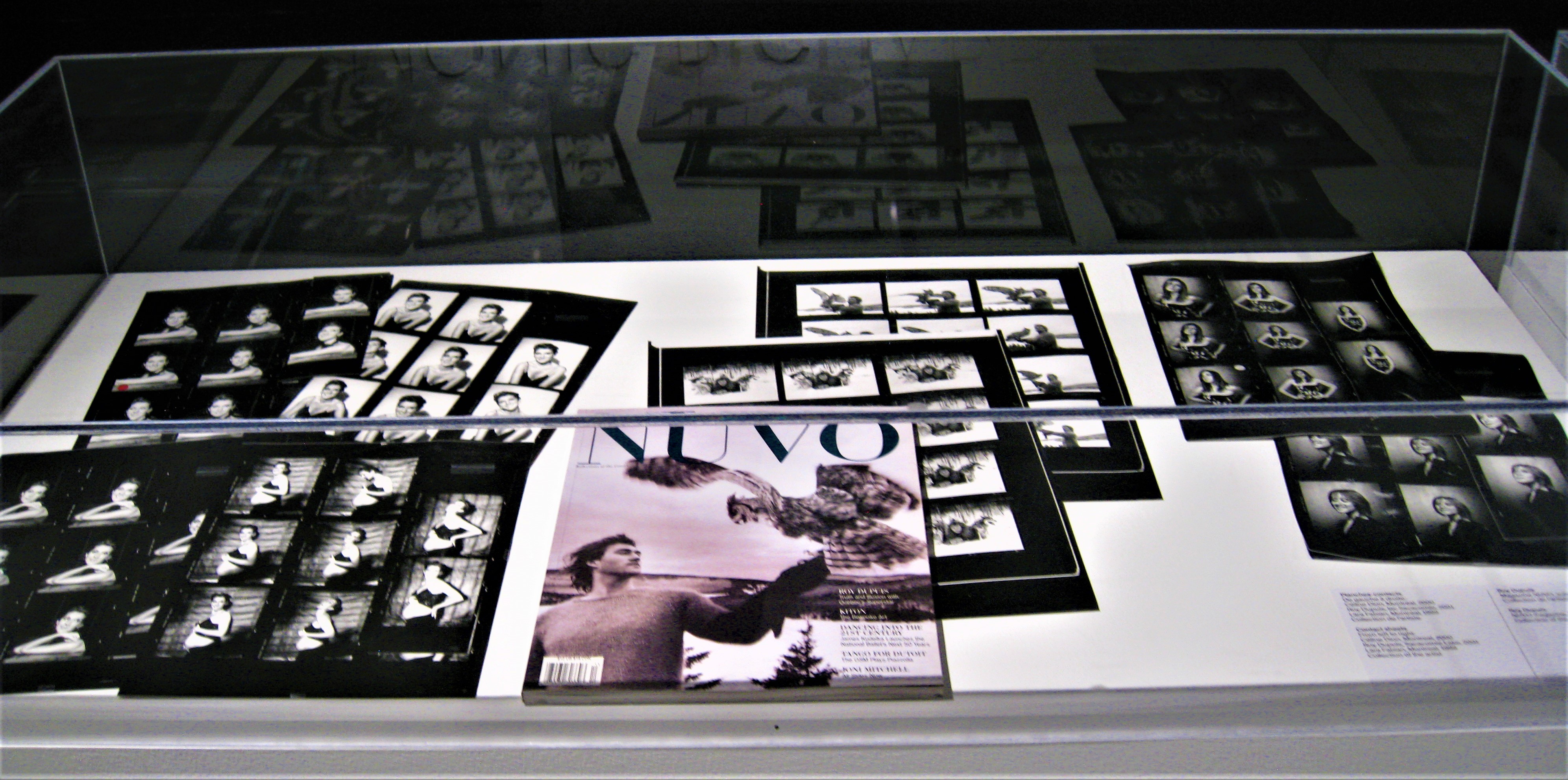
This McCord Stewart Museum’s exhibition is foremost a celebration of the talent of Quebec photographers, whose creative works appeared in the world’s leading fashion magazines, advertising agencies, and in music scenes. The prints of 17 established and emerging photographers who were either born in Quebec or immigrated here, but who all have international reach, are brought together in a well-designed exhibition. They are: Max Abadian, William Arcand, Richard Bernardin, Alex Black, Sacha Cohen, Cristina Gareau, Andréanne Gauthier, Royal Gilbert, Shayne Laverdière, Carl Lessard, Monic Richard, Norman Jean Roy, Étienne Saint-Denis, Nelson Simoneau, Oumayma Ben Tanfous, Xavier Tera and villedepluie.

In addition to fashion photos taken for the press, an impressive series of iconic portraits are presented to the public, from Céline Dion, U2 and Charlotte Cardin to Nelson Mandela, Zidane, Elisapie, Adele, Barbie Ferreira, Mika and Les Louanges.

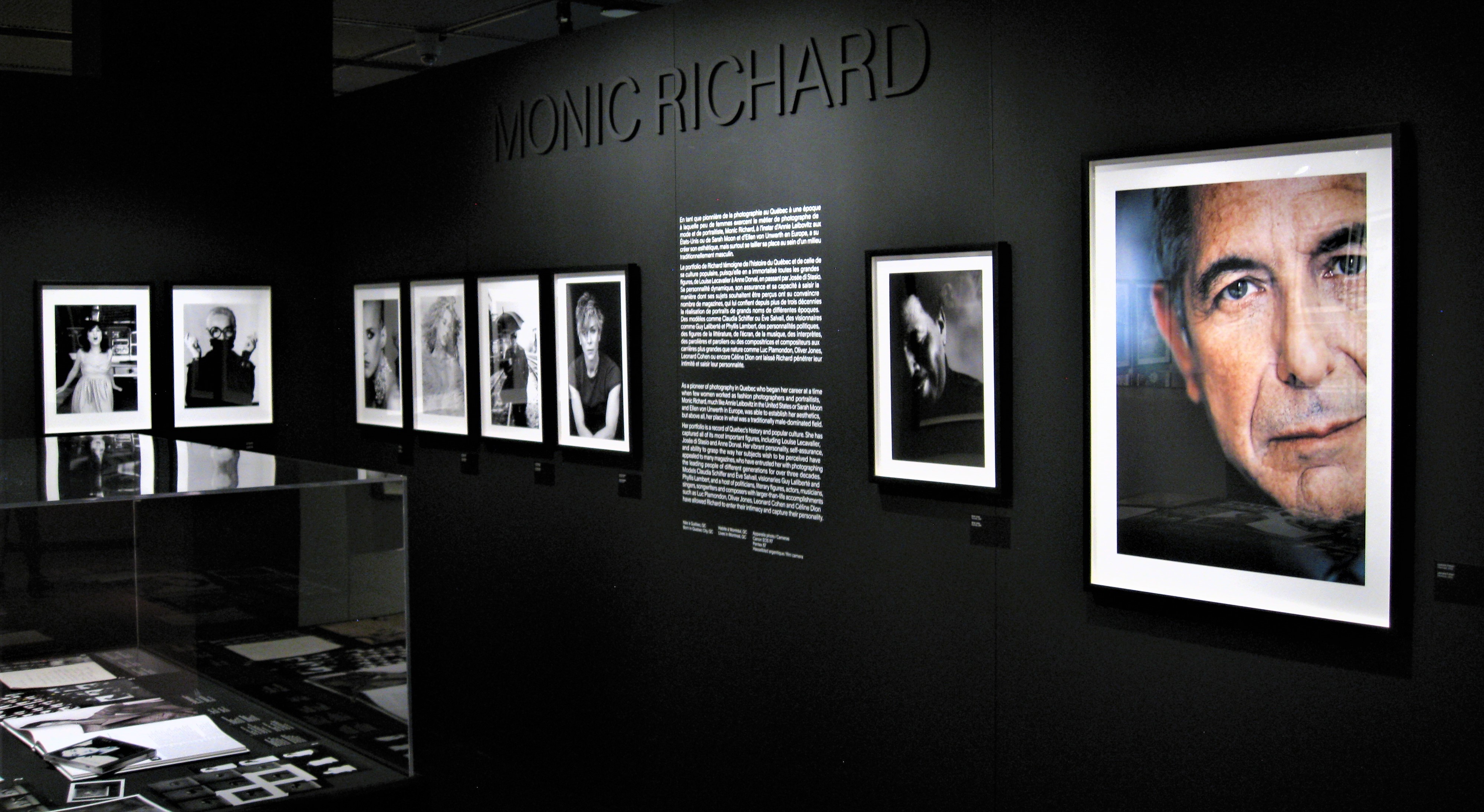
This exhibition, presented by Holt Renfrew Ogilvy, is aimed at a wide audience with a passion for photography, fashion and the world of Quebec, Canadian and international celebrities. It is accompanied by a catalogue featuring 268 photographs by the 17 photographers.

Some twenty audiovisual pieces were produced for the occasion, including a multi-surface projection by the creative agency Rodeo FX. They offer a peek inside the photographers’ artistic approach and feature anecdotes from artists who were photographed by the exhibition photographers.

Anne Eschapasse, President and CEO of the McCord Stewart Museum’s stated:

“This exhibition is the second instalment of our summer programming devoted to fashion photography and celebrity portraits, alongside Norman Parkinson: Always in Style. It’s an unprecedented opportunity to meet 17 local photographers, who are true ambassadors of Quebec’s creative vitality, reaching out to the four corners of the globe. It also reflects the growing concern for greater diversity in the fashion industry and society in general. Perhaps it will inspire the next generation of photographers to dare to dream beyond borders.” 

The exhibition was curated by Thierry-Maxime Loriot, the man behind several memorable exhibitions, including Thierry Mugler: Couturissime, The Fashion World of Jean Paul Gaultier: From the Sidewalk to the Catwalk, and most recently, the retrospective devoted to the creative duo Victor & Rolf, Portraits and Fashion: Quebec Photographers Beyond Borders is his first exhibition to focus on contemporary editorial, commercial and commission photography.

 Thierry-Maxime Loriot stated:

“There are so many ways you could define the work of these 17 artists, who brilliantly blend the different genres of photography. They are sometimes referred to as portraitists, documentarians, image artists or fashion photographers. But they all have one thing in common: Quebec. Whether from Tunisia or Iran, the Laurentians or Montérégie, well-established or yet-to-be-discovered, these artists have all developed their unique creativity and aesthetic vision in Quebec, before exporting and establishing themselves as key players on today’s international scene. For some, Quebec’s fashion and publishing microcosm and its photography schools have been a springboard that has propelled them towards the great capitals – such as New York, London, Paris, Los Angeles and Tokyo – and the pages of the biggest magazines.” 


A summer of fashion at the Museum

The exhibition completes the diptych of exhibitions devoted to fashion photography presented this summer at the McCord Stewart Museum. Portraits and Fashion: Quebec Photographers Beyond Borders picks up where Norman Parkinson: Always in Style leaves off in 1990, presenting the evolution of recent fashion photography. Visitors to the Museum will be able to explore a century in the evolution of fashion and the particular photographic art associated with it. The two exhibitions will also reveal just how far we’ve come since Norman Parkinson’s time.

Click on images to enlarge them.

All photos @ Nadia Slejskova

For more information about current exhibitions and special evens associated with this exhibition, visit the McCord Stewart Museum website.


Friday, May 24, 2024

Centaur Theatre 56th Season

Centaur Theatre 56th Season

CENTAUR THEATRE ANNOUNCES ITS 2024/25 SEASON:

Where Great Stories Bring Us Together

May 23, 2024

PRESENTING:


Sakura

September 17, 2024 — October 6, 2024

A nostalgia-filled comedy that reimagines Chekhov for the 21st century, following a down-and-out family as they face the impending sale of their beloved orchard. based on Anton Chekhov’s masterpiece The Cherry Orchard, written by Montreal playwright and actor Harry Standjofski, and directed by Centaur Artistic Director Eda Holmes. This world premiere adaptation brings the play home from 19th century Russia to 21st century Quebec where one over-privileged family faces an uncertain future with nostalgia, anxiety, and a healthy dose of Chekhovian wit.

Three Women of Swatow

November 5, 2024 — May 24, 2024 

By Toronto-based Chloé Hung, this play paints the portrait of three generations of women through the lens of the Chinese-Canadian diaspora. This darkly comedic play looks at the legacy of abuse, the power of family, and how to prevent the resurrection of a headless chicken. Originally presented at the Tarragon Theatre, this award-winning and critically acclaimed work will feature a cast and creative team drawn almost exclusively from the Asian-Canadian community. A French translation of the play has been commissioned to offer performances with French surtitles.

Strawberries in January - A Musical Fantasy

January 21, 2025 — February 9, 2025

Written by Évelyne de la Chenelière and translated by Morwyn Brebner. An aspirational dreamscape following four lonely hearts as they search for the kind of connection with someone else that makes you want to sing. This musical adaptation of the original play is led by the renowned Québec director Frédéric Bélanger. It is a beautiful mix of the Anglophone and Francophone theatre communities.

For the Pleasure of Seeing Her Again

May 13, 2025 — June 1, 2025

Michel Tremblay's classic an homage to Tremblay's mother, returns to the Centaur stage for the first time since it premiered in English in 2002. The production will feature Ellen David and Emmanuel Schwartz, bringing these two leading actors—one from the English community and one from the French community—under the direction of Tremblay’s close collaborator Alice Ronfard. It promises to reveal this Quebec classic in a whole new light. 

-----------------------------------
For more information on the present and future programs and activities, visit the Centaur Theatre website.

Saturday, May 11, 2024

The Little Prince Exposition 2024

THE LITTLE PRINCE AMONG MEN Exposition

Le Petit Prince Parmi Les Homme

May 1 - June 30, 2024

At Place Bonaventure

Everyone knows the book The Little Prince, but do you know the man behind this work?

Discover the fascinating life of the book's author Antoine de Saint Exupéry who was not only a writer, but also an aviator, postal worker, poet and philosopher. The exhibition highlights one of the best-selling works in the world through animated images, as well as by portraying the author's destiny and his fascination with planes. It includes film projections, audiovisual montages and testimonies from the writer, his family and his friends, as well as many other documents.


The life of Antoine de Saint-Exupéry fascinates as much as the literary character of the Little Prince he created in his book. Between his birth on June 29, 1900 and his death on July 31, 1944 when he perished in a fatal plane crash, the French writer lived an intense and even a hectic life.


Antoine de Saint Exupéry's life is portrayed and explained to visitors through 32 exhibition stations which the public visits one by one. All the stations are explained by the audio guide given to each visitor at the entry to the exhibition.


It would take approximately one or one and a half hours to visit the exposition. But it might take longer if one intends to closely read and examine various documents in many displays protected under the glass.


Visit Montreal, Place Bonaventure, for an experience that is both quite interesting and enriching.

FREE for children aged 4 and under.

More information here.

Click on images to enlarge them.

All Photos @ Nadia Slejskova

This article's dedicated internet address, or also click on the title above the very first photo in this article.


Friday, May 10, 2024

PAC 2024: Olmecs

OLMECS AND THE CIVILIZATIONS OF THE GULF OF MEXICO

April 18 - September 15, 2024

This fascinating exhibition that lifts the veil on Mesoamerica’s earliest known civilization, is presented in collaboration with the Instituto Nacional de Antropología e Historia, Mexico City.

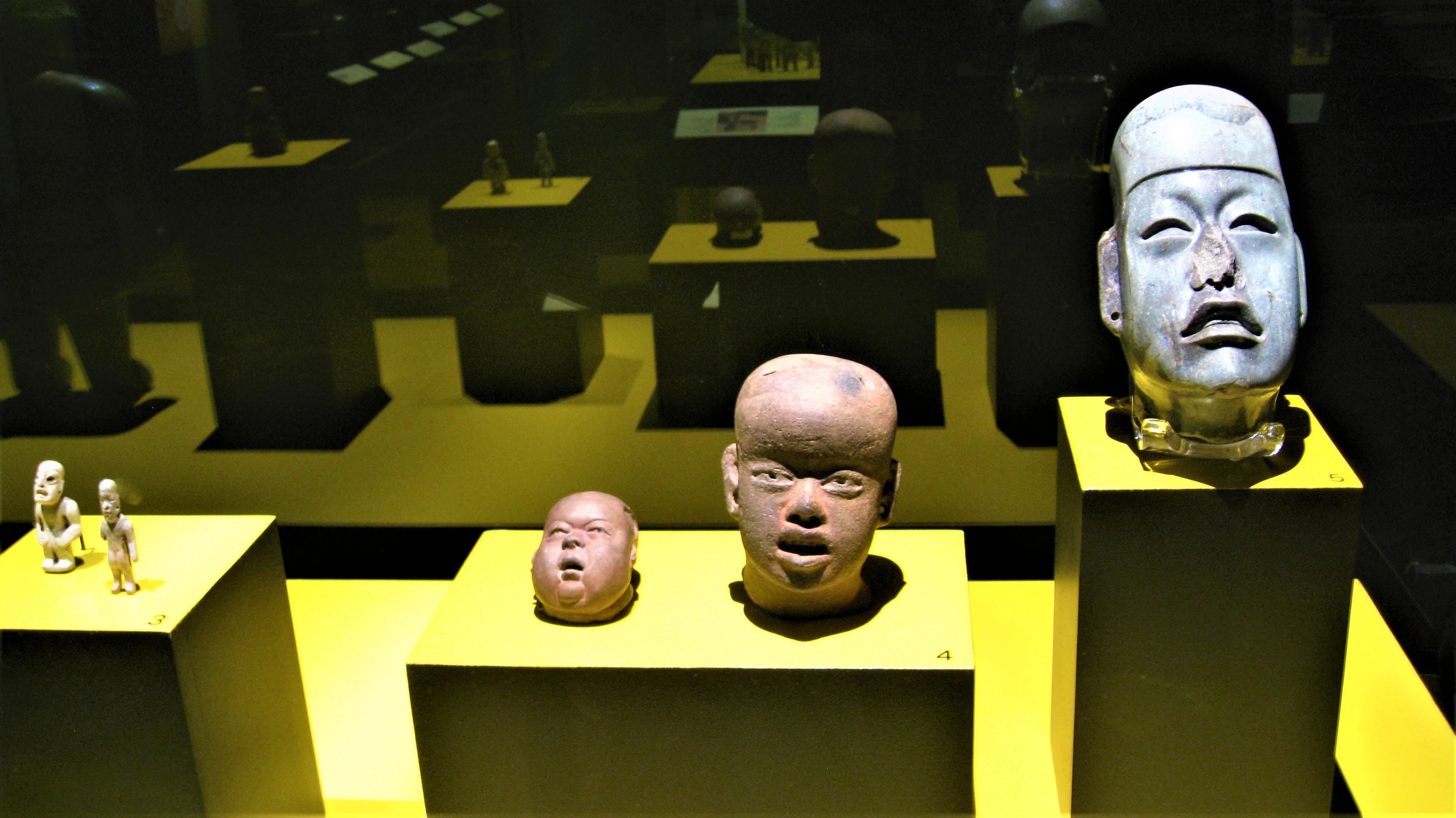
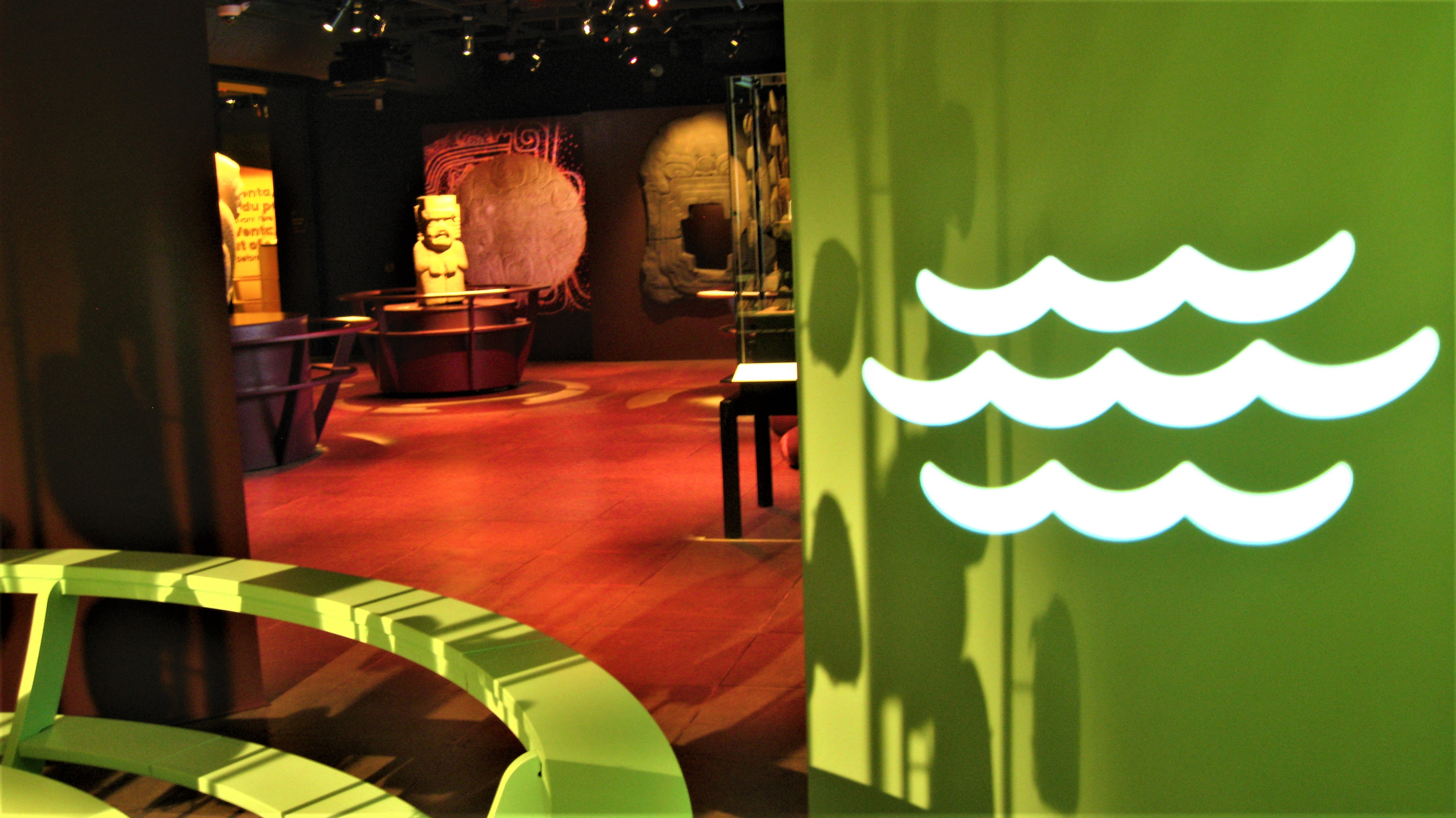
For the first time in Canada, an exhibition dedicated to the Olmec civilization and the abundant heritage it left behind is being presented at Pointe-à-Callière, Montréal’s archaeology and history complex. The visitors have an exceptional opportunity to delve into the cultural riches and mysteries surrounding Mesoamerica’s earliest known civilization. The exhibition features close to 300 objects, including certain masterworks never seen before on any public display. It offers a uniqu immersion, through a journey across almost 4,000 years of history, exchanges, and traditions.

The Olmecs left behind a monumental cultural legacy that was not discovered until the 19th century. Considered to be the founding people of the Mesoamerican civilizations (1600 BCE to 200 CE), traces of their heritage can be found among the Mayas (1100 BCE to the 16th century) and the Aztecs (13th century to the 16th century), among others. The temporary exhibition Olmecs and the Civilizations of the Gulf of Mexico lifts the veil on this civilization that remains largely unknown to the general public and opens the door to a fascinating world.

A Captivating Exploration of Olmec History

From the city of San Lorenzo (the cradle of Olmec civilization 3,500 years ago) to the capital of La Venta (the seat of power at its apogee) to the final city of Tres Zapotes, the exhibition takes visitors on a journey through time and across the civilization’s iconic sites. A colossal stone head, jaguar-men, jade figurines, and monumental stelae and sculptures are on display throughout the exhibition, providing an understanding of the Olmecs’ social organization and beliefs. These archaeological treasures also reveal aspects of their way of life, their ingenuity, and their deep connection to their generous but hostile natural environment illustrated in their architecture, their calendar system, and their writing. Their cultural, artistic, and ideological influence persisted in the civilizations that came after them. The exhibition continues across the Mesoamerican landscape with an exploration of objects from various cultures inspired by this heritage, which has spanned the eras down to the present day.


An Exceptional International Collaboration

The magnificent objects on display in this exhibition are the result of a renewed partnership with Mexico’s Instituto Nacional de Antropología e Historia (INAH). They include masterpieces from a dozen Mexican institutions, with most of the objects on loan from the Museo Nacional de Antropología in Mexico City. A colossal head weighing several tons, along with hundreds of other artifacts, have made the journey from various Mexican archaeological sites and museums all the way to Montréal.

Anne Elisabeth Thibault, Executive Director of Pointe-à-Callièrestated:

“It is with great emotion that we have received these priceless objects, witnesses to the grandeur of the Olmec civilization. We are proud to present this exhibition, showcasing these treasures and giving the public an opportunity for an authentic encounter with this fascinating culture. The collaboration between our two institutions bears witness to our shared commitment to promoting intercultural understanding, and we extend our thanks to all partners involved. Their contribution has made this enriching and unforgettable experience possible for our co-citizens and visitors.”


Olmec Facts and Figures

  • The Olmec civilization’s era extends from 1600 BCE to 200 CE.

  • The Olmecs once occupied a territory that today corresponds to the coasts of the Gulf of Mexico to the south of the states of Veracruz and Tabasco.

  • The first discovery attributed to the Olmec civilization was a colossal stone head unearthed by a peasant on the site of Tres Zapotes in 1858. In all, 17 of these heads have been discovered.

  • Archaeological digs have revealed various sculptures decorated with symbols and patterns that have made it possible to prove the Olmec’s invention of writing and the measurement of time.

  • The Olmecs originated a sport that all major Mesoamerican civilizations would go on to practice: the Mesoamerican ballgame.

  • Olmec traditions that persist in Mexico today: offerings, festive traditions, patron saint days, etc.


COMPLEMENTING THE EXHIBITION

Publication
In collaboration with Beaux-Arts magazine, a special issue dedicated to the exhibition
Olmecs and the Civilizations of the Gulf of Mexico has been published, offering a deep dive into the heart of Olmec art and culture through articles written by specialists in the field. This wonderfully illustrated publication serves to complete the exhibition experience. It is available for $21.95 at the Museum Shop.

Guided Tours
The Museum is giving guided tours during which you can explore the exhibition and ask any questions you may have:
- Guided tours (20 min.) / Daily (schedules at the welcome desk)
- Family Activity Booklet (available at the welcome desk)

Cultural Activities
All summer long, the Museum is encouraging people to come explore the exhibition and celebrate Mexican culture and traditions at several events held in collaboration with Mexican artists and cultural organizations:
- Cinco de Mayo / Sunday, May 5, from noon to 4 pm
- Block Party on the Pointe / Saturday, June 15, from 2 pm to 10 pm
- Family Sundays / Sundays, from July 7 through August 18, from 1 pm to 4 pm

Lectures
To delve further into the topic of the temporary exhibition Olmecs and the Civilizations of the Gulf of Mexico, Pointe-à-Callière is presenting a series of three lectures exploring various aspects and themes addressed in the exhibition:
- Discovering the Olmecs / Thursday, May 16 at 7 pm
- The Evolution of Corn and its Importance in America / Thursday, August 15 at 7 pm
- Ancient Mesoamerica / Thursday, September 12 at 7 pm
Explore the program on Pointe-à-Callière’s
website.

ACKNOWLEDGEMENTS

The exhibition Olmecs and the Civilizations of the Gulf of Mexico is produced by Pointe-à-Callière, Montréal’s Archaeology and History Complex, in collaboration with the Secretaría de Cultura – Instituto Nacional de Antropología e Historia in Mexico.

The exhibition is presented by Desjardins, and through a partnership with Air Canada Cargo, Tourisme Montréal, Hôtel InterContinental Montréal, and La Presse. The Museum sincerely thanks its lenders, sponsors, and partners.

ABOUT POINTE-À-CALLIÈRE, MONTRÉAL ARCHAEOLOGY AND HISTORY COMPLEX

Inaugurated in 1992, on the city’s 350th anniversary, Pointe-à-Callière is today the largest archaeology museum in Canada and the busiest history museum in Montréal. Rising above a concentrated number of historic and archaeological sites of national significance—including the birthplace of Montréal—, the Museum has a mission to preserve its collections and to further knowledge, while showcasing and fostering an appreciation for Montréal’s archaeological and historical heritage. This mission is carried out through various activities focused on conservation, research, presentation, education, and inclusion, along with community initiatives benefiting both Montrealers and visitors to the city.

Click on images to enlarge them.

All Photos @ Nadia Slejskova

For more information on the current exhibitions, activities and programs, visit the PAC Museum's website.

This article's dedicated internet address, or click on the title above the very first photo.


Wednesday, April 17, 2024

MMFA 2024: Andō Hiroshige

東海道 Tōkaidō

Dreamscapes by Andō Hiroshige

A captivating journey from Edo to Kyōto, illustrated by Japanese master printmaker Andō Hiroshige

April 27 – September 8, 2024

The Montreal Museum of Fine Arts (MMFA) is presenting an iconic series of prints by Andō Hiroshige (1797-1858) from its collection. For the first time in over two decades, it is pulling from storage these remarkable woodblock prints that illustrate scenes of everyday life unfolding at each relay station along the Tōkaidō, the famous Eastern Sea Road that connected Edo (now Tokyo), to the former imperial capital, Kyoto.

Dreamscapes by Andō Hiroshige  presents all 55 prints of the very first edition of "Fifty-three Stations of the Tōkaidō," a series that has been in the MMFA's collection since 1973 and that was published in 1833-1834 by Hoeidō and Senkakudō publishing houses. The exhibition looks at the talent of Hiroshige and his publishing team in creating an idyllic world everybody wanted to inhabit. It also examines the factors that led to the astronomical commercial success of these prints, which popularized the landscape print and fueled the emergence of Japonisme in Europe.

An Invitation to travel to 19th-century Japan

An unconventional artist from the samurai class, Hiroshige was not the first to be interested in the Tōkaidō. However, the success of his first series on the subject far eclipsed that of all those that came before it. In fact, some of his illustrations were reprinted more than 15,000 times. These beautifully depicted scenes fostered the perception that the Tōkaidō was more than a mere road along the country's eastern sea coast – it was a destination in and of itself.

At the time it was created, this series sparked a desire in the masses to take the nearly 500-kilometre journey on foot from the Nihonbashi Bridge in Edo to the Sanjōhashi Bridge, in Kyoto. The 53 relay stations depicted promised travellers everything from lodging to specialty foods, sexual services and products of all sorts, including straw sandals.

Being an imaginary work, the "Fifty-three Stations of the Tōkaidō" transcended the straightforward observational representation of places and offered instead a fantasy vision of Japan. Hiroshige's Tōkaidō treated the landscape and its atmospheric effects – wind, snow, rain – as subjects in their own right, an approach that was completely novel at the time.

The artist also cited highly popular travel books and incorporated elements that came from Europe (Western perspective, horizontal picture format, shading and synthetic blue pigment) to create exotic dreamscapes with wide appeal. Seeing a commercial opportunity in the fast-growing the consumer and travel culture, he worked closely with his publishing team to turn the print into a powerful publicity tool that would ensure widespread visibility for cosmetic products, eating establishments and teahouses, as well as promote regional culinary specialties.

Laura Vigo, Curator of Asian Art at the MMFA stated:

"The seductive charm with which Hiroshige imbued his compositions earned him the reputation as a master of Japanese landscape prints. In his captivating illustrations, he cleverly blended the real and the imaginary, to almost cinematic effect, becoming the maker of a world everybody yearned to inhabit and travel within – a world that still charms us to this day."

Mary-Dailey Desmarais, Chief Curator of the MMFA added:

"Montreal is lucky to be home to one of the country's most important collections of graphic art, built through the generosity of its community. We are excited to be shedding new light on this celebrated series of prints by Hiroshige, which helped shape the collective imagination of Japan. It is a joy to share with Montreal audiences these remarkable prints gifted to us in 1973."

Credits and curatorial team

An exhibition organized by the Montreal Museum of Fine Arts.
Curator: Laura Vigo, Curator of Asian Art, MMFA

This article's dedicated internet address, or also click on the title above the very first photo in this article.

Visit the Montreal Museum of Fine Arts website to check on the opening hours and to purchase your tickets online.


Tuesday, April 16, 2024

McCord Steward 2024: Norman Parkinson

Audrey Hepburn, Photo Norman Parkinson

NORMAN PARKINSON: ALWAYS IN STYLE

SIXTY YEARS OF FASHION PHOTOGRAPHY

NORTH AMERICAN PREMIERE

Presented by Holt Renfrew Ogilvy

April 19 - September 2, 2024

McCord Stewart Museum is presenting a new exhibition that brings into focus the works of the British photographer Norman Parkinson, especially those of his photos that relate to fashion, glamour and celebrities. Always in Style is the first of two exhibitions devoted to fashion and portrait photography that will be making their North American premieres this year.


With his flamboyant personality but also artistic sensibility, Norman Parkinson gave a new impetus to fashion photography and celebrity portraiture. Between the years 1930 - 1980 he photographed not only famous models but also some of the most influential actors and actresses of that generation, including royalty and the crowned heads of Europe. He immortalized many of the 20th century’s biggest celebrities including Audrey Hepburn, Jerry Hall, David Bowie, Beatles, Rolling Stones, Jane Birkin and many others. 

Beatles, Photo Norman Parkinson

The exhibition offers to the public 79 of Norman Parkinson’s best-known photographic images. In addition, it also includes the recent discoveries from his immense and remarkable photographic portfolio. Also on display is a selection of 56 covers of major magazines – Vogue (British and American), Harper’s Bazaar, Tatler, etc. that were shot by Parkinson between the 1950s and 1970s.

Visitors will also discover several magnificent pieces from the McCord Stewart Museum’s Dress, Fashion and Textiles collection: 10 high-end dresses and ensembles made between the 1930s and the 1970s by French designers Christian Dior, Jacques Griffe, Jean Patou, Louis Féraud and Guy Laroche, Italian André Laug, and British designers Digby Morton and Hardy Amies, plus four creations by Quebec milliners Fanny Graddon and Yvette Brillon.


STEPPING OUT OF PHOTOGRAPHY STUDIOS

Norman Parkinson made a name for himself early in his career with his unconventional style. Favouring the outdoors rather than the constrained, formal environment of a photo studio, he set his models in motion in sumptuous, often unusual, settings. The 1939 photograph of model Pamela Minchin, captured mid-air in a Fortnum & Mason swimsuit on the Isle of Wight (England) for Harper’s Bazaar, illustrates this interest in spontaneity. He said of this image:

“When I pulled that picture out of the soup it confirmed to me for the rest of my life that I had to be a photographer. I was absolutely amazed by the magic of it.” 

It was this dynamic style that attracted the attention of the most celebrated fashion magazines, including Harper’s Bazaar, Vogue (British and American) and Town & Country, and earned him international recognition. One of the first fashion photographers to incorporate colour into his practice, he said:

“I dream in colour... When you dream in colour... one must photograph in colour.”

DECADES OF CREATIVITY

Much of Parkinson’s enduring success is attributed to his ability to reinvent his style over trends and decades, and to maintain his reputation despite the emergence of new generations of young photographers and models. Between the 1940s and 1950s, Parkinson began a long collaboration with British Vogue, producing images with a narrative character, as seen in Young Velvets, Young Prices (New York, Vogue, 1949), which features four models wearing hats against a backdrop of New York skyscrapers. This period also saw the appearance of images of his muse and wife Wenda Parkinson, who became one of the period’s top models. The 1960s and 1970s were marked by major lifestyle changes, but Parkinson had no trouble keeping up. Throughout the 1960s, Parkinson continued to spot new faces and began working with Queen magazine. In the 1970s, his images helped elevate new models to stardom, including the likes of Jerry Hall and Iman. During this twenty-year period, Parkinson took iconic photographs of the Rolling Stones and the Beatles, as well as fashion designers like Yves Saint Laurent, Hubert deGivenchy, Jean Muir and Zandra Rhodes. In the 1980s, Parkinson was awarded the title of Commander of the Order of the British Empire by Queen ElizabethII and created a series of portraits for a retrospective organized by London’s National Portrait Gallery.

The exhibition's curator Terence Pepper OBE stated:

 “I hope that the audience will appreciate the opportunity to witness the significant moments in the career of a photographer who not only played a crucial role in the development of fashion photography in the 20th century but also excelled as a portrait artist. Throughout his prolific 60-year career, spanning from 1931 until his passing in 1990, while still in action, he demonstrated a remarkable ability to capture and reflect the essence of the era in which he worked.”

Click on images to enlarge them.

All photos @ Nadia Slejskova

The exhibition includes a self-guided tour for families.

For more information about current exhibitions and special evens associated with this exhibition, visit the McCord Stewart Museum website.

This article's dedicated internet address, or click on the title above the very first photo.


Norman Parkinson with his Nikon, Photo Graham Lawrence